TL;DR
-
Everyday carry (EDC) refers to the items a person keeps on them every day to stay prepared for common situations and emergencies.
-
A typical EDC setup includes a knife, light, wallet, phone, and a small medical kit at minimum.
-
The best EDC setup depends on your lifestyle, training, and what you legally carry in your area.
-
An EDC bag or pouch organizes your gear and keeps everything accessible without digging through pockets.
-
Morale patches and velcro panels are a big part of how the EDC community personalizes and identifies gear.
-
Build your setup around function first. Gear that sits unused because it is too bulky or annoying to carry defeats the purpose.
True preparedness means having the right tools on hand before an unexpected situation occurs rather than trying to find a solution after things go wrong. The global EDC community brings together active military personnel, veterans, law enforcement officers, and prepared civilians who all share a common interest in practical utility.
If you are cutting open a shipping pallet, navigating a sudden power outage, or dealing with a medical emergency, your daily loadout dictates how effectively you can respond.
What Does EDC Stand For?
EDC stands for everyday carry. It refers to the collection of utility items a person keeps on their body or within arm's reach each day. The concept originated within military and law enforcement culture where carrying mission essential equipment is a matter of standard operating procedure. This practice eventually spread into the broader preparedness, survival, and outdoor communities.
Today everyday carry is both a practical habit and an active subculture where gear enthusiasts share pocket dumps online, review equipment setups, and customize their kits using patches and specialized organizational accessories.
Why Bother With EDC?
Most daily emergencies are small, inconvenient events. A flat tire on a dark road, a loose screw on a piece of equipment, a minor cut, or a sudden power outage can disrupt your day. Having a dedicated selection of EDC gear allows you to handle these situations without a second thought.
Some emergencies are significantly more dangerous. Carrying a high output light or a personal tourniquet can mean the difference between being a helpless bystander and being able to save a life. The goal is not to carry every tool imaginable, but rather to select the right items for your specific daily environment so you are prepared without feeling weighed down.
For military members and veterans, building an EDC kit naturally extends the organizational habits developed during service.

The Core EDC Items
No two everyday carry setups are completely identical, but most tactical and preparedness focused configurations rely on the same fundamental categories of gear.
-
Knife or multitool: A folding knife or compact multitool is one of the most frequently used items in any daily setup. It handles basic cutting tasks, light prying, and minor mechanical repairs throughout the day.
-
Flashlight: A compact flashlight belongs in every daily kit regardless of how often you expect to use it. A bright, reliable light is essential for low visibility situations, sudden power outages, and identifying threats in the dark.
-
Wallet: A slim wallet keeps payment cards, cash, and identification accessible without adding unnecessary bulk to your pockets. Many modern designs incorporate RFID blocking technology to protect against electronic theft.
-
Phone: A smartphone is an automatic part of daily carry for almost everyone. For tactical users, this tool becomes far more valuable when loaded with offline navigation maps, emergency contacts, and digital medical references.
-
Lighter or fire starter: A small lighter takes up minimal space and covers tasks ranging from simple daily conveniences to emergency survival situations.
-
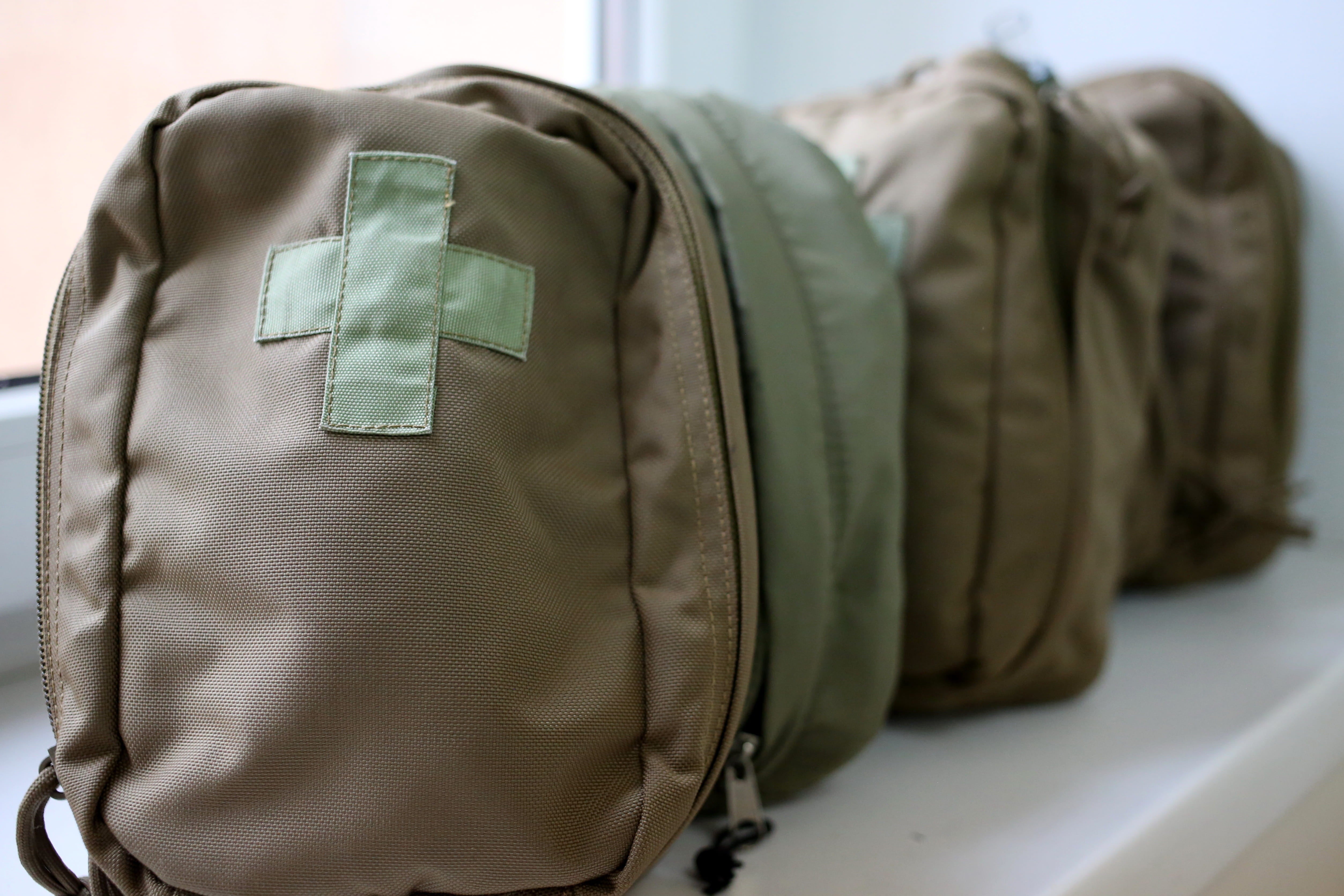
Small medical kit or IFAK pouch: A minimal medical kit containing a tourniquet, a pressure bandage, and protective gloves closes the gap between a severe injury being manageable or fatal. A compact IFAK pouch securely mounts to an EDC belt or pack to remain accessible yet out of the way until needed.
-
EDC pouch or organizer: A small pocket organizer keeps loose items from rattling around inside a bag or getting buried at the bottom of your pockets. Many EDC pouches feature an integrated Velcro loop panel on the front surface for attaching patches.
-
Pen: A durable pen takes up very little room and gets used more frequently than most people anticipate. Specialized tactical pens can also double as an emergency glass breaker or a backup defensive tool.
Choosing an EDC Bag or Carry Method
Your daily environment and clothing choices dictate how you choose to transport your gear. There are three primary carry methods used to keep your equipment secure and accessible.
Pocket Carry
Pocket carry works best for minimal gear setups consisting of a knife, a light, a slim wallet, and a phone. This method keeps your profile entirely low commercial and requires no extra bags. The primary tradeoff is a strictly limited carrying capacity and a total lack of room for comprehensive medical supplies.
Belt Carry
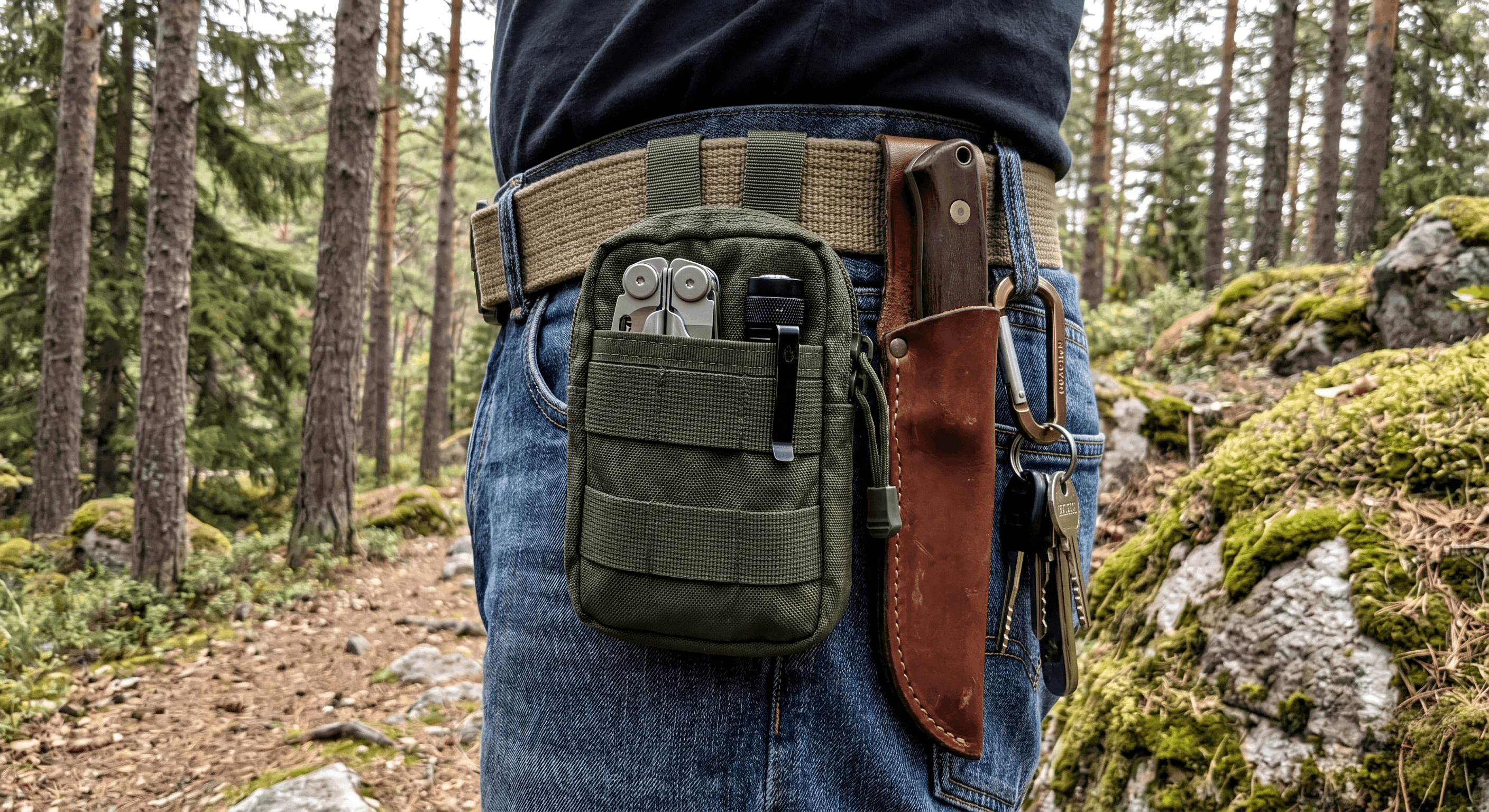
A belt setup utilizing a rigid EDC belt allows you to carry more weight directly on your frame without needing a backpack. Common belt items include a folding knife, a flashlight, an IFAK pouch, and a secure holster for those who carry a concealed firearm. This modular approach is highly familiar to law enforcement and military personnel who are accustomed to carrying load bearing equipment on their waist.
Sling Carry
An EDC bag or tactical sling pack allows you to carry a complete loadout while remaining compact enough for daily commuting. Look for a tactical bag that features internal organization dividers, external MOLLE webbing for modular attachments, and an external velcro panel for morale patches or name tapes.
A bag that lacks dedicated internal organization is incredibly difficult to use under high stress conditions.
Where Morale Patches Fit Into EDC
The modern everyday carry community adopted the use of morale patches directly from military aviation and ground unit culture. Hook and loop backed patches attached to bags, admin pouches, and hats have become a standard way for users to personalize their equipment. Having a prominent velcro loop panel on an EDC pack allows you to swap out identifiers depending on your current location or personal preference.
Apart from simple personalization, patches serve vital functional purposes during an emergency. Placing a high visibility medical cross patch on an IFAK pouch tells a bystander exactly where your trauma gear is located if you are incapacitated. A customized name tape affixed to a backpack identifies your property immediately in a crowded room or vehicle trunk. Reflective or infrared patches can also be added to improve your visibility to teammates during low light operations.
Material selection is highly important when choosing patches for gear that faces daily friction. Heavy duty PVC patches hold up exceptionally well on external bag surfaces because they resist water, mud, and abrasion. Classic embroidered patches remain an excellent choice for lower wear surfaces like hats, jackets, and internal loop panels.
To learn more about how these options differ, read our breakdown of the history and importance of military patches. If you are building out a new kit, it is also smart to consider the different attachment styles available by reviewing our guide on the 5 types of patch backings to ensure compatibility with your gear.
EDC Setup by Audience
Everyday carry is highly subjective, and different professional backgrounds naturally influence what items prioritize space in a loadout.
Military and Veterans
Active duty service members routinely carry a version of EDC both on and off duty. Off duty setups tend to be highly streamlined, focusing on a premium pocket knife, a small flashlight, a slim wallet, and a streamlined ankle or pocket medical kit. These setups rely on the exact same survival principles as an active duty deployment loadout but eliminate unnecessary tactical weight.
Law Enforcement and First Responders
Law enforcement everyday carry typically centers around a rigid duty belt configuration while on the clock. Off duty carry configuration almost always transitions to a concealed firearm, spare ammunition, and a pocket sized medical kit. The focus for first responders is on choosing tools that are incredibly fast to deploy and entirely legal to carry while wearing plainclothes.
Tactical Enthusiasts and Preppers
This group tends to build the most deliberate, highly organized everyday carry configurations. Their kits are frequently updated to match specific daily scenarios such as an afternoon at the firing range, a daily work commute, or long distance vehicle travel. They treat their gear as a scalable survival system and routinely rotate items based on seasonal weather or shifting threat environments.
Civilians and Commuters
A highly practical civilian loadout does not need to look overtly tactical to be deeply useful. A reliable pocket knife, a small AA flashlight, a slim wallet, a portable phone charger, and a basic compact first aid kit will easily clear most daily hurdles. The underlying goal for a commuter is practical everyday preparedness rather than trying to project a specific tactical aesthetic.
The most expensive tactical tools are completely useless if they are left sitting on your dresser because they are too heavy or uncomfortable to carry. Focus on building a functional system that directly aligns with your daily routine, your environment, and your personal training level.
If you are ready to customize your setup, explore our selection of custom morale patches, rugged name tapes, and our tactical pouches to optimize your daily loadout.
EDC Gear FAQs
What does EDC stand for?
EDC stands for everyday carry. It refers to the items a person keeps on them or within reach every day to handle common situations and emergencies.
What should be in an EDC kit?
A basic EDC kit should include a folding knife or multitool, a compact flashlight, a slim wallet, a lighter, and a small medical kit. More complete setups add an EDC pouch or organizer, a pen, and a phone with emergency apps.
What is a good EDC bag?
A good EDC bag is compact, organized, and built from durable material. Key features to look for include MOLLE webbing for attaching additional pouches, a velcro panel for patches or identification, multiple compartments for organized access, and a form factor that does not draw attention.
What is the difference between EDC and a go bag?
An EDC kit is what a person carries on their body or in a small bag every single day. A go bag is a larger, pre packed kit kept in a vehicle or at home for emergencies or evacuations. EDC gear is meant to be used regularly, while a go bag is set aside and left ready.
Do morale patches have a place in EDC?
Yes. Morale patches are a well established part of EDC culture. Velcro backed patches are used on EDC bags and pouches for personalization, identification, and functional marking. A medical cross patch on a first aid kit and a name tape on a bag are both common examples of functional EDC patching.
How do I start building an EDC kit?
Start with the basics: a knife, a light, and a wallet. Add a compact medical kit once those are dialed in. Choose a carry method, such as pocket, belt, or bag, based on your daily environment. Build toward a setup you will actually carry every day rather than the most gear heavy option available.
What is an EDC belt?
An EDC belt is a sturdy, purpose built belt designed to support the weight of everyday carry items like a holster, a knife, a pouch, and a flashlight. EDC belts are typically made from reinforced nylon or leather and hold their shape better than standard dress belts under the weight of daily carry gear.